Getting more serious about bowling often brings up one key question: fingertip grip vs conventional bowling. That moment usually hits after watching someone curve the ball effortlessly while others roll it straight.
The difference is not luck. It comes down to grip style. After spending time learning both, the impact on control, rev rate, and overall performance becomes impossible to ignore.
Core Differences That Change Your Game
Understanding the core difference helps build a strong foundation before choosing a style.
The primary difference between these two grips is how deep your fingers go into the ball. This small change completely alters ball motion, release timing, and overall lane reaction. It also affects how much spin you can generate.
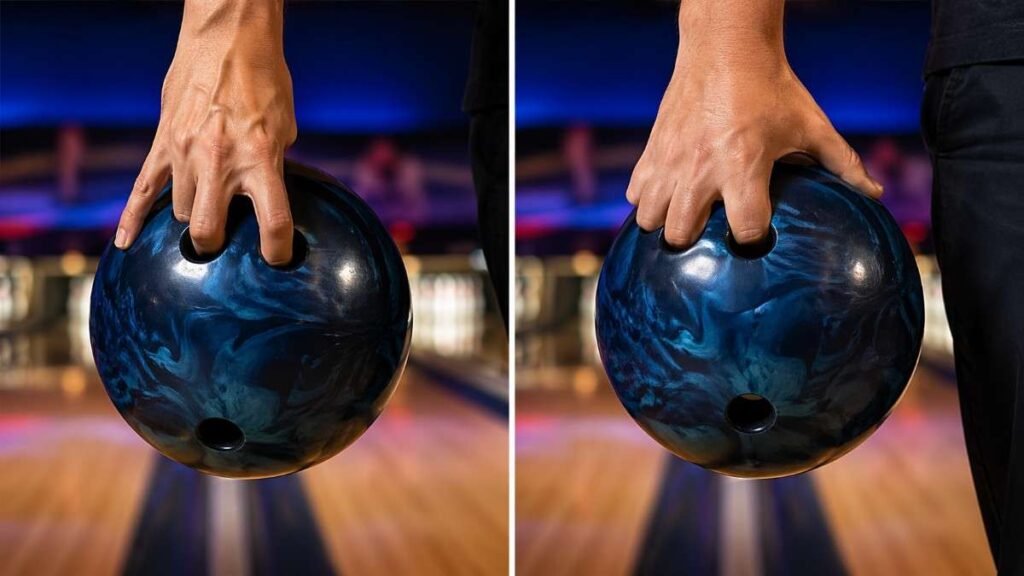
In conventional grip, fingers are inserted up to the second knuckle. In fingertip grip, fingers only go in to the first knuckle. This difference changes leverage, which directly impacts hook potential and rev rate.
Quick Comparison At A Glance
This section simplifies the key differences so you can quickly decide which suits your game.
| Feature | Conventional Grip | Fingertip Grip |
| Finger Depth | Inserted to the second knuckle | Inserted to the first knuckle |
| Best For | Beginners and straight shots | Advanced players and hook shots |
| Hook Potential | Low | High |
| Control | High | Moderate |
| Hand Stress | Higher due to deeper insertion | Lower with better weight distribution |
This overview highlights why competitive players almost always transition to fingertip grip over time.
3 Key Differences
Breaking down the mechanics helps you understand how each grip affects your performance.
1. Conventional Grip Basics
With fingers inserted to the second knuckle, the ball feels stable and secure. The thumb and fingers exit the ball at nearly the same time, which makes straight shots easier. This is ideal for learning targeting and balance. However, generating hook with this grip is difficult because it limits finger lift and reduces rev rate.
2. Fingertip Grip Mechanics
Because fingers are only inserted to the first knuckle, the thumb exits first during release. This allows the fingers to rotate and lift the ball, creating more spin. That extra rotation increases hook potential significantly. This grip also supports higher rev rate, which is essential for modern bowling techniques for a strike.
3. Feel And Weight Distribution
Many bowlers say fingertip grip makes the ball feel lighter. That happens because the weight is spread more naturally across the hand. While it may feel less secure at first, it becomes more comfortable with practice. Conventional grip feels more stable initially, but it can create more strain on fingers over time due to deeper insertion.
How To Choose Between The Two?
Choosing the right grip depends on your goals, experience, and playing style.

Choose Conventional Grip If
This option works best for beginners and casual players. If bowling is more recreational, conventional grip offers comfort and control. It helps you focus on fundamentals like aim, timing, and balance without worrying about spin. It is also ideal for straight shots, especially when consistency matters more than power.
Choose Fingertip Grip If
This is the better option for improving performance and scoring higher. If the goal is to increase rev rate and hook potential, fingertip grip is essential. It allows better control over ball motion and improves strike chances through stronger entry angles. Many experts recommend starting with fingertip grip if you plan to get your own ball to avoid relearning later.
Matching Grip To Lane Conditions
Grip choice also depends on lane environment. On oily lanes, fingertip grip helps create enough friction to generate hook. On dry lanes, conventional grip can help control excessive movement. Understanding this context gives a strategic advantage.
Switching Grips The Right Way
Switching grips can feel challenging, but the long-term benefits are worth it.

What Changes During Transition
You may notice reduced control and increased finger pressure. The release timing will also feel different because the thumb exits earlier in fingertip grip. This adjustment phase is completely normal.
Steps To Adapt Faster
Start with a slightly lighter ball to reduce strain. Focus on clean release rather than power. Practicing wrist positioning helps maintain control and improves consistency over time. Getting a properly fitted ball from a pro shop is one of the most important steps.
Mistakes To Avoid
Avoiding common errors speeds up progress. Do not grip the ball too tightly. Avoid forcing wrist rotation. Make sure the ball is drilled correctly for your hand size. These small details make a big difference in performance.
The Physics Behind Bowling Grips
Understanding the technical side help not make beginner bowling mistakes builds authority and improves decision-making.

Rev Rate And Spin Control
Rev rate plays a huge role in ball behavior. Fingertip grip increases rev rate because fingers apply more rotational force at release. Conventional grip limits this motion, resulting in lower spin and straighter shots. Higher rev rate improves pin carry but requires better control.
Hook Potential And Ball Motion
Fingertip grip creates stronger hook because of increased rotation and friction interaction with the lane. Conventional grip produces minimal hook, making accuracy more important than power. Balancing hook and control is key to consistent scoring.
Finger Placement And Biomechanics
The difference between first knuckle vs second knuckle affects leverage. Fingertip grip creates a longer span between thumb and fingers, allowing better lift and energy transfer. This improves overall efficiency during release. Conventional grip reduces leverage but increases stability, which helps beginners.
Common Myths
Clearing misconceptions helps make better choices.
Fingertip Grip Is Only For Pros
This is not true. While professionals use it, beginners can learn fingertip grip with practice and proper coaching. Starting early can even accelerate improvement.
Conventional Grip Is Always Safer
It feels safer, but not always better. While conventional grip offers control, it limits growth in advanced techniques like hooking the ball. It is a stepping stone, not the final stage.
More Hook Means Better Scores
Hook helps, but control matters more. Too much hook without accuracy can reduce consistency. The goal is balance between rev rate and precision i.e. your bowling form.
Frequently Asked Questions
1. Do Pro Bowlers Use Fingertip Or Conventional?
Most professional bowlers use fingertip grip because it increases rev rate and hook potential needed for competitive play.
2. Are Fingertip Bowling Balls Better?
They are not better by default, but they allow more spin and control, which helps improve scoring for skilled players.
3. What Is The 3 6 9 Rule In Bowling?
It is a spare system where you adjust your starting position by 3 boards to target different pin setups.
4. Why Do Some Bowlers Hate Urethane?
Urethane balls reduce hook and lane transition, which can limit high rev players who rely on strong ball motion.
Choosing Your Winning Grip
Understanding fingertip grip vs conventional bowling is a game changer for anyone looking to improve. Conventional grip builds confidence and control, while fingertip grip unlocks power, rev rate, and advanced shot-making.
The right choice depends on your goals, but learning both gives a clear advantage. With practice and proper technique, transitioning can elevate your performance and make every frame more competitive.