That satisfying curve into the pocket is what makes bowling so addictive, and mastering the bowling wrist position for hook is where real progress begins. After trying different grips, releases, and timing adjustments, one thing becomes clear very quickly. The wrist plays a much bigger role than most beginners realize.
It controls how the ball rotates, how much it hooks, and how consistently it hits the pocket, making it one of the most important fundamentals to get right early on.
Why Bowling Wrist Position For Hook Matters
The wrist quietly controls spin, direction, and how your ball reacts on the lane.
Control Over Rev Rate
A firm and slightly cupped wrist increases your rev rate, which is the number of rotations your ball makes. More revolutions create stronger friction with the lane, resulting in a sharper hook and better pin action.
Axis Rotation And Ball Path
Your wrist position determines axis rotation, which affects how wide and how late the ball hooks. Keeping your hand behind and under the ball allows for cleaner rotation and a predictable curve of the bowling ball.
Balance Between Power And Accuracy
Too much wrist action can lead to wild shots, while too little reduces hook potential. The goal is controlled power with a smooth, repeatable release.
Best Bowling Wrist Position For Hook
Let’s break down what actually produces a strong and consistent hook.
Cupped Wrist Position
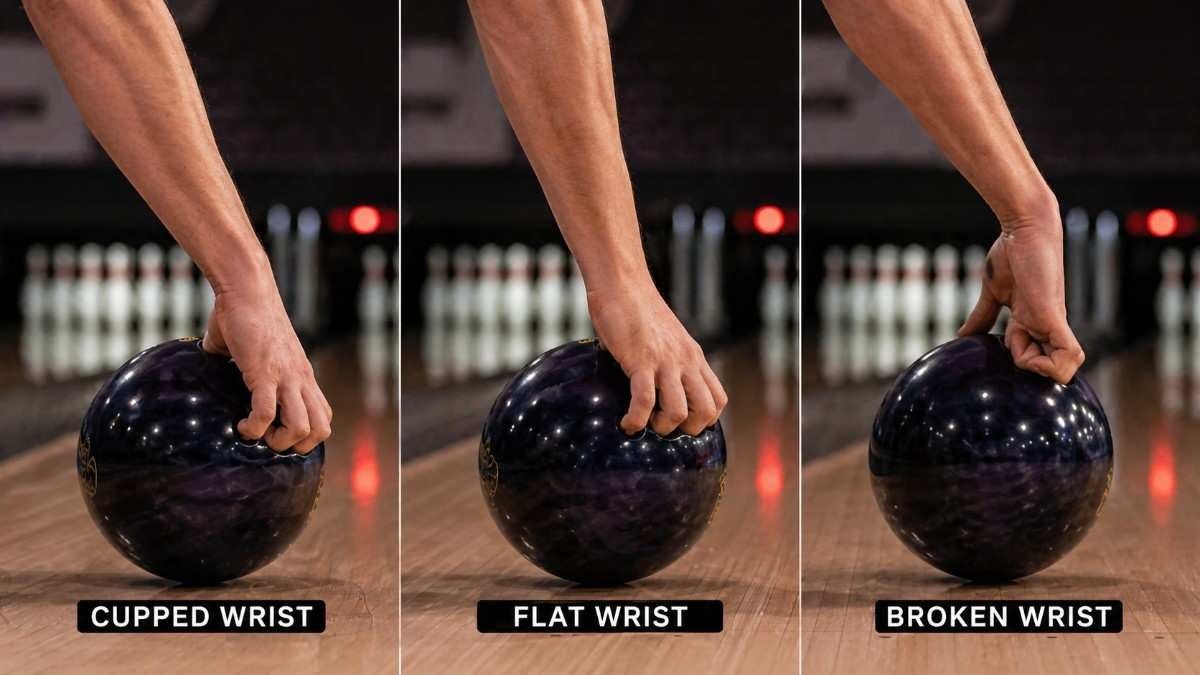
A cupped wrist means your wrist is slightly bent inward toward your forearm. This stores energy during the swing and releases it into rotation, creating a stronger hook. It works especially well on oily lanes.
Flat Wrist Position
A flat wrist keeps your hand in line with your forearm. This produces a smoother and more controlled hook, making it useful for medium or dry lane conditions where too much hook can be risky.
Hinged Or Cocked Wrist
Cocking the wrist slightly to the side increases axis tilt, which can create a sharper backend reaction. This technique is often used by intermediate and advanced bowlers for added angle.
Physics Behind The Hook Shot
Understanding the science helps you make smarter adjustments on the lane.
Friction And Lane Interaction
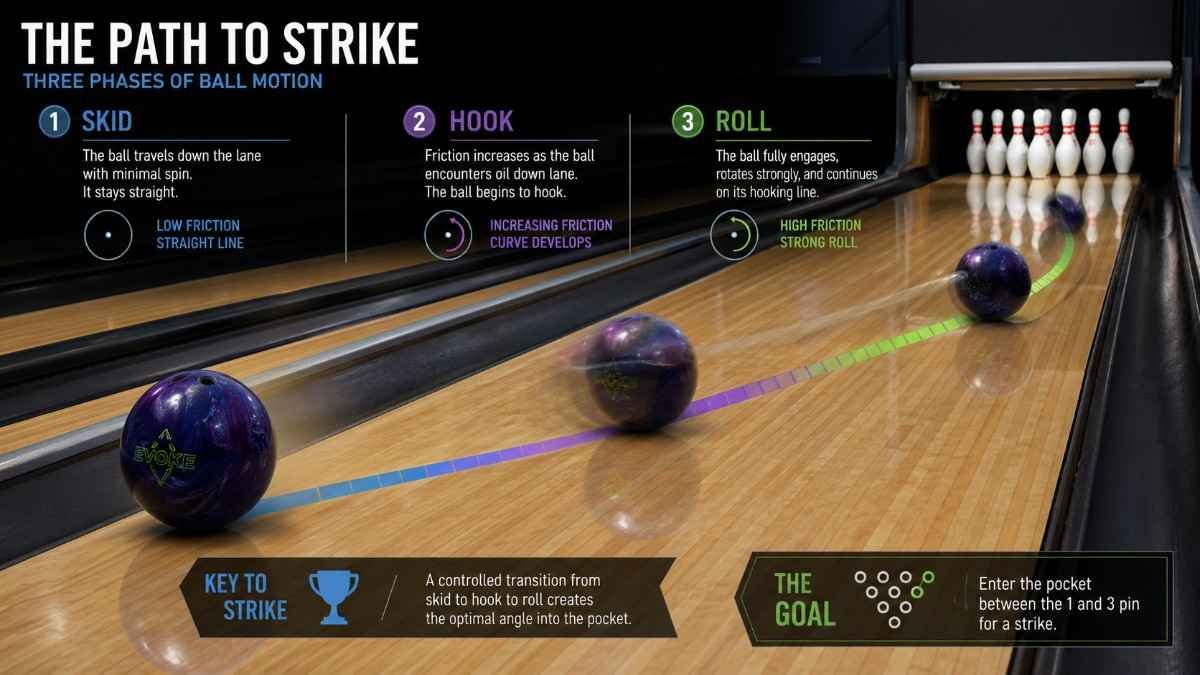
The ball moves through three phases: skid, hook, and roll. A proper bowling wrist position for hook increases friction at the right moment, allowing the ball to curve into the pins instead of sliding straight.
Torque And Energy Transfer
A cupped wrist builds torque, which is stored energy. As your thumb exits and your fingers rotate, that energy transfers into the ball, creating spin and motion.
Timing Of Release
The hook happens in a fraction of a second at release. If your timing is off, you lose power and control. A smooth transition from cupped to relaxed wrist is key.
Beginner Vs Intermediate Techniques
Your approach should evolve as your skill improves.
Beginner Technique
Start with a firm and mostly straight wrist. Focus on keeping your hand behind the ball and avoid over-rotating. Consistency matters more than hook at this stage.
Intermediate Technique
Introduce a slight cupped wrist and begin working on finger rotation. Learn to adjust your wrist angle based on lane oil and ball reaction.
Advanced Adjustments
Experienced bowlers fine-tune wrist position for different oil patterns. Small changes in angle can significantly impact hook strength and entry angle.
How To Use Bowling Wrist Position For Hook
This is where technique comes together step by step.
Setup And Grip
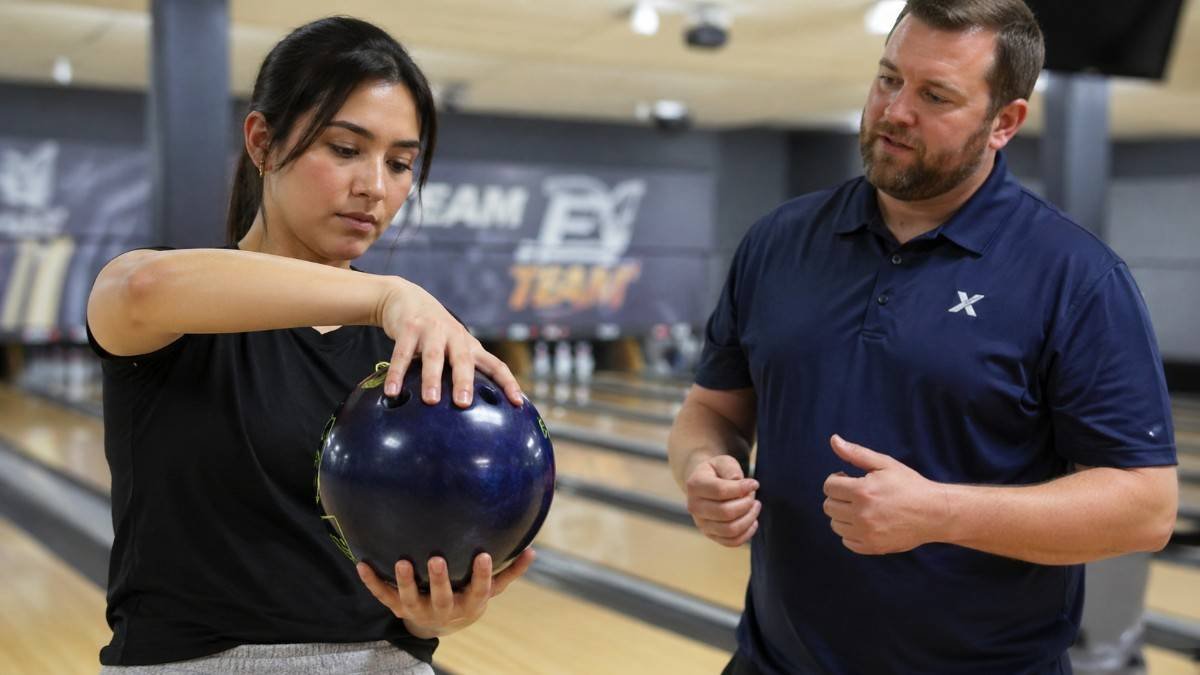
Keep your wrist firm and slightly cupped. Your hand should stay behind and underneath the ball’s equator. A fingertip grip can help increase leverage and control.
Swing And Stability
Let your arm swing naturally like a pendulum. Avoid forcing your wrist during the swing. Stability is more important than movement here.
Release Mechanics
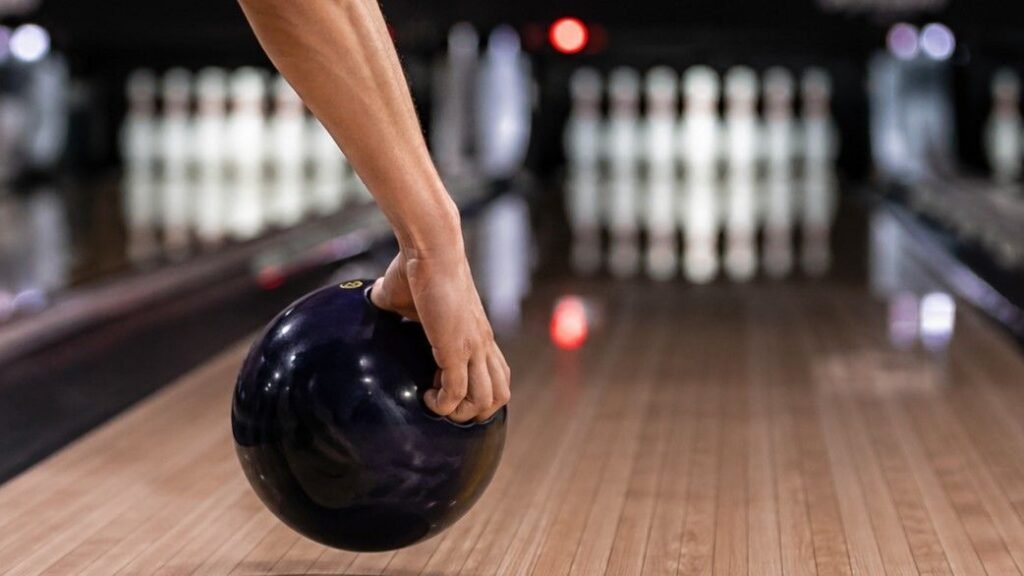
The thumb exits first, followed by the fingers. As this happens, rotate your fingers from about the 7 o’clock to 4 o’clock position. Think of finishing in a handshake position for a clean release.
Common Mistakes To Avoid
Avoiding these errors will instantly improve your hook.
Turning The Wrist Too Much
Many players try to spin the ball with their wrist. This reduces accuracy and consistency. The hook comes from finger rotation, not twisting.
Collapsing Wrist Position
A weak or broken wrist kills power and reduces hook potential. Keeping your wrist firm is essential for maintaining control.
Forcing The Shot
Trying too hard to create hook leads to poor timing and bad habits. Let technique and physics do the work instead of muscle force.
Pro Tips To Improve Hook Performance
Small adjustments can lead to big improvements over time.
Use The Handshake Method
Visualize starting behind the ball and finishing with a handshake motion. This helps maintain proper rotation and follow through.
Practice Release Drills
Work on releasing the ball smoothly with correct finger rotation. Repetition builds muscle memory and consistency.
Adjust Based On Conditions
More oil requires more wrist cup for stronger hook. Less oil calls for a flatter wrist to maintain control and accuracy.
Frequently Asked Questions
1. Do you turn your wrist to hook a bowling ball?
No. The hook comes from finger rotation and proper wrist position, not twisting your wrist during the swing.
2. What is the 3 6 9 rule in bowling?
It is a targeting system where you move your feet three boards to adjust your shot and correct ball path.
3. How should your wrist be when bowling?
Your wrist should remain firm and slightly cupped, staying behind and under the ball for better control and hook.
4. Where to aim when hooking a bowling ball?
Aim at the arrows on the lane, usually the second arrow, and let the ball curve into the pocket.
Final Frame Wins if Master Your Hook Game
Mastering the bowling wrist position for hook is about control, timing, and understanding how your body influences the ball. A firm, slightly cupped wrist combined with proper release mechanics creates consistent hook and better pin action. With practice and smart adjustments, your shots become more reliable, powerful, and satisfying every time you step onto the lane.